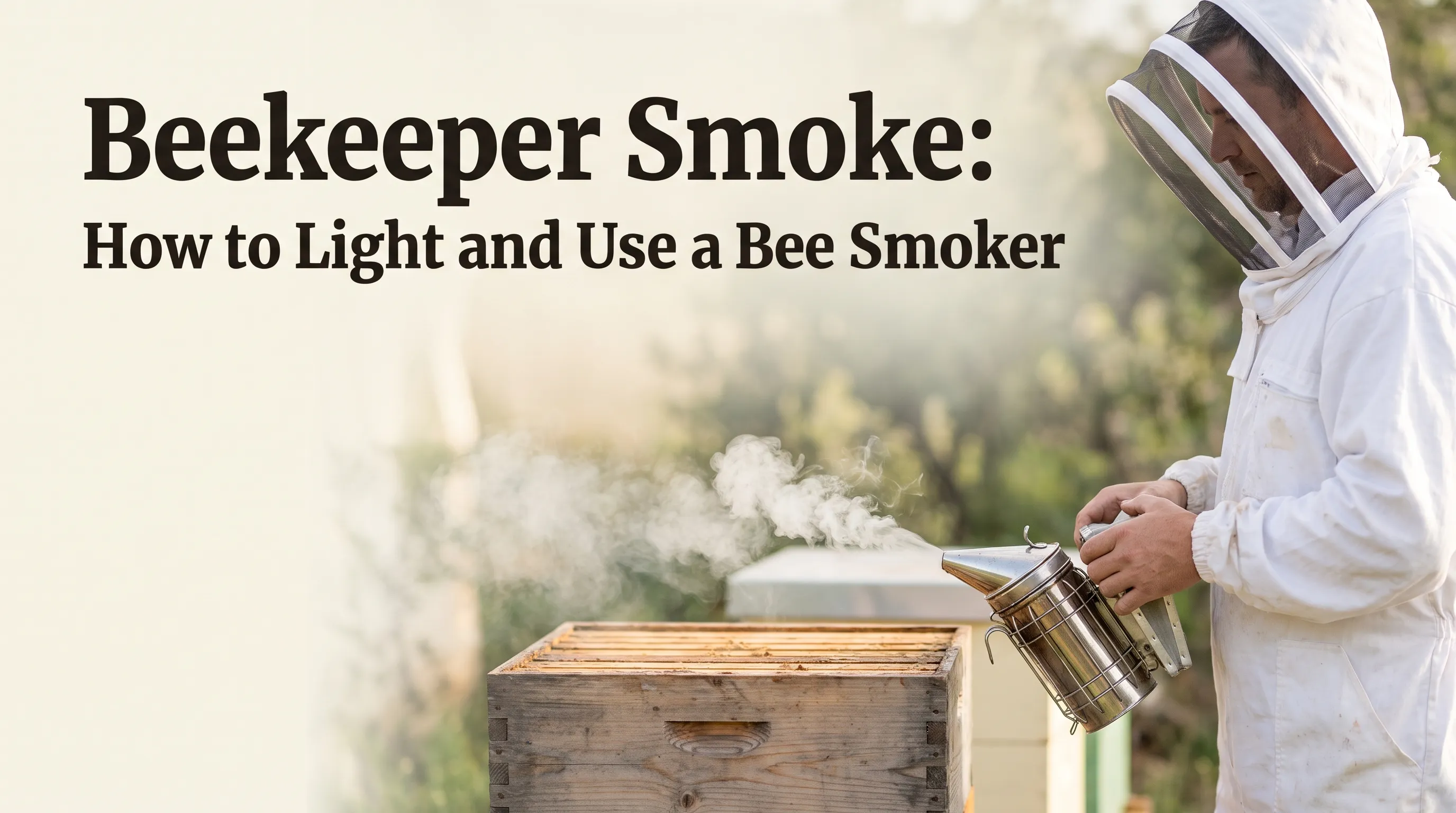
Beekeeper smoke is not a sedative. It interrupts the alarm signal that spreads through a colony when you open the hive.
Light a small fire in the smoker, pack it with dry fuel, and give two or three puffs at the entrance. Wait 30 to 60 seconds, then open the cover and work. It’s about cool, dense smoke in small amounts. Too much smoke, or smoke that is hot and acrid, makes bees defensive and can leave a smell in honey.
This guide covers what smoke does to bees, how to use a bee smoker, the best fuels, how to light it so it stays lit, and how to put it out safely.
Why do beekeepers use smoke?
Smoke calms bees by interfering with the alarm pheromone. When a bee is crushed or feels threatened, it releases a mix of chemicals from a gland near the sting. One of them smells like banana candy.
Other bees pick it up on their antennae and prepare to defend the hive. Smoke makes it hard for that chemical message to travel and harder for bees to detect it. Good beekeeper smoke works on that signal, not on the bees’ mood.
Brandon Hopkins, a honey bee scientist at Washington State University, told WSU’s Ask Dr. Universe in 2026 that smoke “interferes with how the bees pick up the chemical message” and can reduce how much alarm pheromone each bee releases. UGA’s Bee Program puts it another way: smoke disrupts the normal defense response, so bees tend to flee from the smoke rather than advance.
Smoke also sends bees down into the hive. That clears the top bars so you can lift frames. You’ll see bees with their heads in honey cells. Hopkins says, “Nobody is sure why bees do that,” though a full honey stomach makes it harder for a bee to bend and sting.
Bee Culture notes two schools of thought: smoke masks alarm pheromones, or bees think the hive is on fire and gorge before leaving. The masking effect is well supported. The fire story is a reasonable explanation, not a proven fact.
Parts of a bee smoker
A smoker has four working parts: the fire chamber, the bellows, the lid and spout, and the heat shield. The bellows push air into the bottom of the chamber. Air moves up through the fuel and out the spout.
That’s why the fire has to start at the bottom: the flame should be below the fuel, not above it. A heat shield protects your hand from the hot chamber. It doesn’t make the smoker cool to touch.
Best fuel for a bee smoker
The best fuel for beekeeper smoke is dry, untreated plant material that smolders instead of flaming. Pine needles are the classic choice in the South. UGA’s Bee Program calls pine straw hard to beat in Georgia: it is easy to find, easy to light, and makes dense smoke.
Bee Culture’s David MacFawn packs pine needles tightly after the fire is established. A firm pack keeps the fuel together and gives you steady smoke instead of a flare. A 4 by 10 inch smoker packed that way can last two to three hours.
| Fuel | Light it | Burn | Notes |
|---|---|---|---|
| Pine needles | Easy | Moderate | Free in pine country. Use dry needles only. |
| Untreated burlap | Easy | Long | Check that it is not treated or coated. |
| Cotton fiber | Moderate | Long | Cool, steady smoke. |
| Wood pellets | Hard | Long | Needs a hot ember bed first. |
| Wood shavings | Easy | Short | Better as a starter than a main fuel. |
| Cardboard | Easy | Short | Plain, uninked cardboard only. |
Never burn treated, painted, glued, or synthetic material. That includes pressure treated wood, plywood, glossy printed cardboard, dryer lint, and fabric with synthetic fibers. The smoke goes into a hive that makes food. Don’t cut corners on fuel.
How to light a bee smoker
-
Clear the chamber. Empty old ash and scrape the spout. A clogged airway is why a smoker will not draw.
-
Start at the bottom. Light a loose ball of dry starter fuel and pump the bellows until you have a real flame and glowing embers.
-
Add fuel in layers. Add a small handful, pump, and wait until it catches. Repeat with larger handfuls.
-
Pack the top. Pack the last layer firmly so the fuel smolders instead of flaming.
-
Cap and test. Close the lid and pump. The smoke should be cool, white, and dense. If it’s hot or acrid, let it settle or add more fuel on top.
UGA’s guide uses pine straw in the same order: light a handful, puff until it flames, pack more on top, then cap the smoker. The goal is “a cool, dense smoke.”
How to keep a smoker lit
The most common reason a smoker dies is a weak ember bed. Fuel piled on top of a small flame smolders, then suffocates. Build the fire first, then add fuel.
| Problem | Likely cause | Fix |
|---|---|---|
| Goes out fast | Weak ember bed | Rebuild the bottom layer and pump |
| Hot, sharp smoke | Fuel too dry or flame too open | Pack more fuel on top and let it settle |
| No smoke | Clogged spout or packed too tight | Clear the spout and loosen the fuel |
| Sparks | Fuel too light or over pumped | Use denser fuel and pump less |
| Dies between hives | No air between uses | Pump every few minutes |
Bee Culture notes that too much smoke can irritate bees. One or two puffs of beekeeper smoke are enough to move bees off a frame. If the colony gets loud, you may have been in the hive too long.
If the smoke is hot enough to sting your eyes, it’s hot enough to push bees out of the hive and make the visit harder than it needs to be.
How to smoke a hive
Smoke the entrance first. Crack the lid, give two or three puffs inside, and close it for 30 to 60 seconds.
Then open the hive. Smoke lightly across the top bars and between the frames you plan to lift. The point of beekeeper smoke is to move bees, not to fill the hive with smoke.
UGA’s guide says smoked bees tend to flee from the smoke rather than advance. That’s the behavior you want. If bees are looking up at you from between the frames, a light puff sends them down. If they get loud, give them another puff and work faster.
Keep smoke away from honey you plan to harvest. Heavy smoke can leave a smell in the comb. Work the entrance and the brood area, and close up when the job is done.
How to put out and clean a smoker
Plan the end of the session before you light the smoker. A smoker can hold live embers for hours after the smoke stops.
- Dump the fuel into a metal container or a bare dirt spot. Don’t dump it on dry grass.
- Douse it with water and stir until there is no heat.
- Or plug the spout and lay the smoker on its side on concrete or gravel. This cuts off oxygen, but it’ll take time.
- Don’t put a warm smoker in a truck bed, a shed, or a garage. Wait until it is cold.
Clean the chamber and spout after the smoker cools. Scrape the creosote, empty the ash, and check the bellows. A clean smoker lights faster next time.
Bee smoker safety
Smoke is fire. Treat it that way. Light the smoker on concrete, gravel, or bare dirt, away from dry grass, leaves, and buildings.
Keep a water bottle or fire extinguisher within reach. Never leave a lit smoker unattended. Don’t set it on a hive lid or on the ground where it can tip.
Wear a veil and gloves, or a bee suit with the cuffs sealed. The chamber gets hot enough to burn through a suit. Use the heat shield and keep your hand away from the metal. On a windy day, watch the sparks and keep the smoker downwind of dry fuel.
Transport only after the smoker is cold. A smoker that looks out can still hold embers. You can’t see the heat.
Bee smoker FAQ
Does smoke hurt bees?
Cool smoke in small amounts is a management tool. Hot smoke and too much smoke stress the colony. Smoke isn’t a sedative. Use the least smoke that moves the bees.
What is the best fuel?
Dry pine needles, untreated burlap, cotton fiber, or plain wood pellets. Never burn treated or synthetic material.
How long does a smoker last?
A 4 by 10 inch smoker packed with pine needles can last two to three hours. Smaller smokers need refilling sooner.
Can I use cardboard?
Plain, uninked cardboard works as a starter. Avoid glossy printed cardboard, tape, and glue.
How do I put it out?
Dump the fuel into a metal container or bare dirt, douse it with water, and stir. Or plug the spout and let it starve of air.
Beekeeper smoke is a tool, not a trick. Build a small fire, pack dry fuel, and use cool smoke in short bursts. Learn to read the colony: bees looking up need a puff, bees boiling out need a pause. Put the smoker out before you walk away.
Next, learn how to inspect a hive with the smoker in hand. Our guide on how to inspect a beehive covers the full procedure. The beginner beekeeping equipment guide covers the rest of the kit.
If you’re still planning your first hive, start with our guide on how to start beekeeping.
Sources were checked on November 5, 2026.
Sources and further reading
- University of Georgia Bee Program, How to Light a Smoker
- Washington State University, Ask Dr. Universe, Why does smoke make bees calm? (2026)
- Bee Culture, Smokers and Smoker Fuel, David MacFawn (2025)
- Carolina Honeybees, Bee Smoker Fuel 101
- Iyanola Apiculture, Module 3: Occupational Safety and Health in Beekeeping